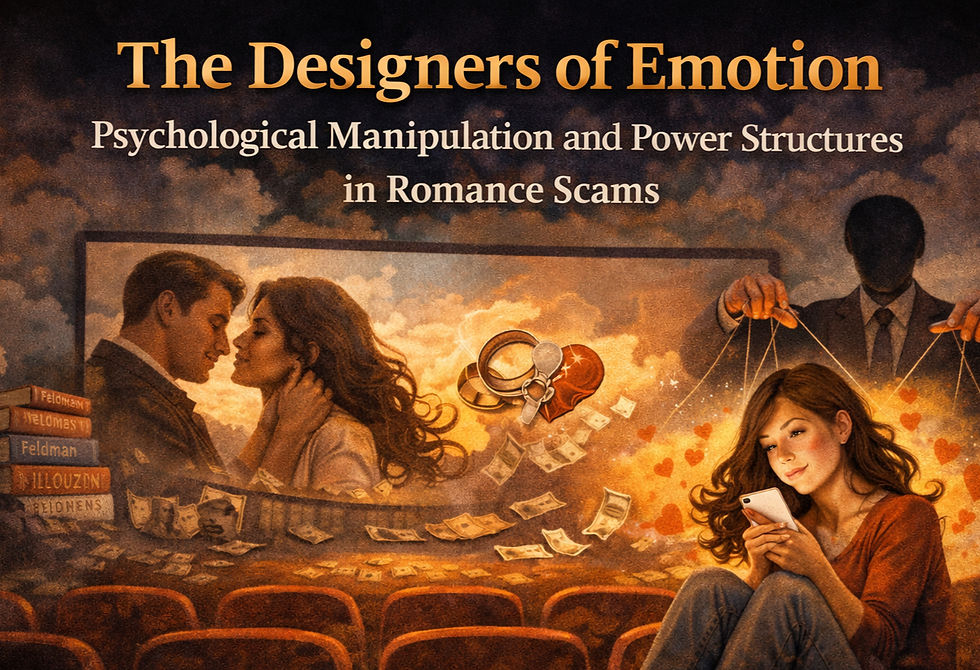
Psychology Behind Scams: Unveiling False Discourses in Romance and Cryptocurrency Fraud
“Fraud does not start with money. It starts with a story.”
People easily empathize with, react to, and are influenced by “facts” created by others. This becomes even more powerful when those stories appear in the media.
Martin Heidegger said that most people live exactly as others speak and as others define, without asking for themselves and without truly thinking.
So are we really “thinking beings”? And what do we mean when we say we “think”?
People judge and believe only within the boundaries of their own thinking. Yet the boundaries of our thinking exist within the social discourse structures society created, and we have absorbed those structures from birth to now.
After long conversations with many victims and many scammers, I realized how firmly they are trapped within their own beliefs. Once they decide “this is the truth,” no explanation can pull them out of that frame.
Foucault pointed out that people believe they think freely, but in reality, they remain imprisoned within the discourse created by society.
I was the same. Before I was scammed, I believed “only foolish people fall for scams.” But that belief itself was nothing more than another frame prepared by society.
This scam shattered my entire way of thinking.
For the first time, I became someone who seeks answers on my own.
Since then, I keep asking myself. Is this right or wrong? If I think it is right, on what basis?
What has shaped my judgment until now?
These questions and this self-examination are what Heidegger called “authenticity.” That is why I continue to ask carefully and never stop.
One thing is certain - This incident awakened something in me. It was not just anger.
Through this experience, I began to see the world differently and confront the distorted social discourses that made these scams possible in the first place.
Social Discourse, Power, and The Psychology Behind Scams
“You can get rich easily with cryptocurrency.” --> This stimulates speculative desire and blurs judgment.
“Victims get scammed because they were careless.” -->This silences victims and creates secondary harm.
“Perpetrators can also be victims.” -->This encourages moral confusion and allows the guilty to avoid responsibility.
“Love is destiny.” -->This strengthens irrational attachment and blind trust.
“Women can be controlled through sex.” -->This justifies the power imbalance.
“Appearance or attractiveness is a basis for trust.” -->This reinforces superficial criteria for judgment.
There are many more false discourses like these, and these discourses are the fundamental roots that enable romance scams and cryptocurrency fraud.
Victims, perpetrators, and even ordinary people remain trapped in these distorted frames.
The psychology behind scams keeps us in this prison; anyone can become a victim of fraud at any time.
I plan to continue discussing these false social discourses with you.
And I have one question.
Are we truly free from these discourses?
Written by: Heesuk Paik